


Fighting Breast Cancer is a Team Effort at West Calcasieu Cameron Hospital
October 2026
Cool Jobs: Ashton Feldhaus – McNeese Cowgirls Basketball Coach
November 2026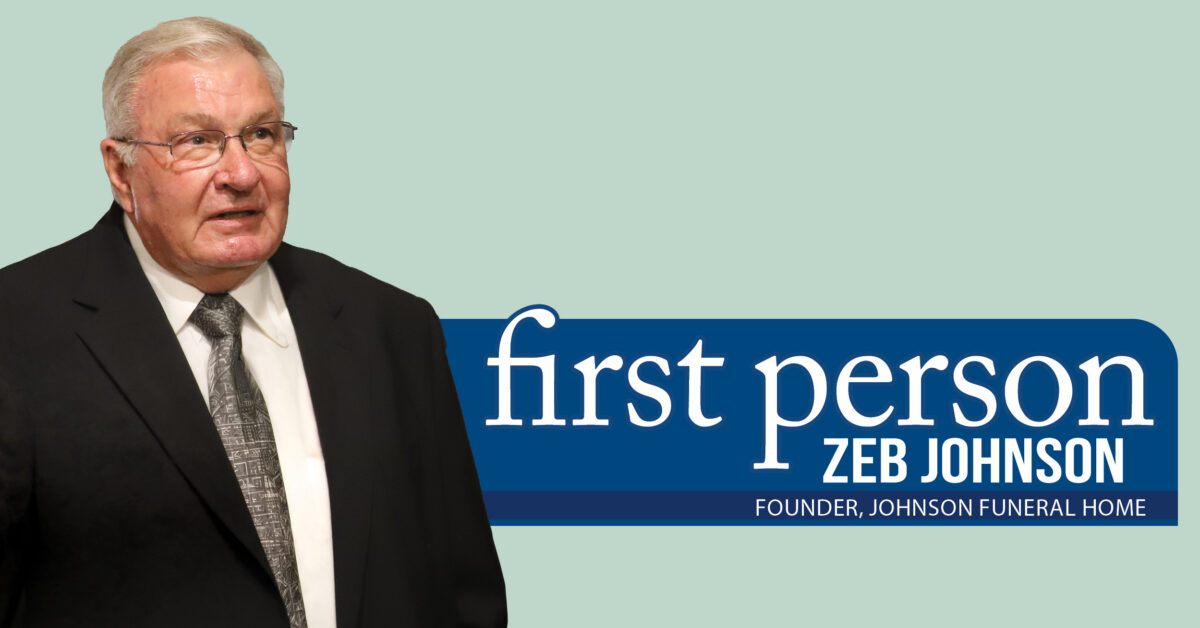
For 50 years, Zeb Johnson has been a trusted presence for Southwest Louisiana families during some of life’s most difficult moments.
In 1976, at just 28 years old, he opened Johnson Funeral Home in Lake Charles as its owner and sole funeral director. What began as a one-man operation has grown into a family-owned business with nine locations across the region and three generations involved in carrying on his legacy. As Johnson Funeral Home celebrates its 50th anniversary, Johnson reflects on the sacrifices, relationships and experiences that shaped his career, the community that made his success possible and why he still considers funeral service a calling rather than a job.
What gave you the confidence to open your own funeral home in 1976?
I’d already been in the funeral business for about 10 years, working in various capacities. I felt I was in a position where I could really help people, and I believed that was my calling. I wasn’t intimidated about opening a business until the day we actually opened the doors. Then I was scared to death! I was 28 years old, married with two children. When the funeral home where I was working found out I was thinking about opening my own business, they fired me. I worked for ambulance services and did other jobs to keep things going while we were getting the building ready. But when opening day came, I had no idea whether anyone would actually call us.
I’ll never forget our very first funeral. We had passed our inspection, but our license hadn’t officially come through yet. I had to get permission from someone on the state board over the weekend. We weren’t even completely set up. The family actually came and helped me unbox the furniture and arrange everything so we could have the funeral. Looking back, that first funeral should have told me something about this community. These people were willing to trust me and help me succeed before I’d even gotten started.
What do you remember most about those early years?
Doing everything! I’d get up at four in the morning to wash the cars, go to the cemetery at daylight to put up the tent, come back to get ready for the funeral, conduct the service, then go back to take down the tent. Sometimes I’d even cover the grave. Then I was on call all night. We didn’t have cell phones or an answering service, so you had to physically be there to answer the phone. I missed a lot of vacations, trips and time with my children. It was hard on the family. In those days, we knew where every pay phone was because we’d have to stop and call the office to check in. There was no GPS either. You learned the streets and followed directions like, “Turn right at the red barn.”
What did you want Johnson Funeral Home to stand for in the community?
I wanted it to be a place where people could get an affordable burial and great service. But the most important thing was helping people get through the worst day of their lives. I’ve never considered this just a job. It’s a vocation, a calling. If you can help people, get things done for them and make their lives a little better, that’s what it’s all about. I still feel that way today.
You’ve served multiple generations of the same families. What does that continued trust mean to you?
That’s the greatest feeling. It’s not a business relationship. It’s a family relationship. I can remember burying a baby for a family in 1976, then years later helping them when a grandfather or grandmother died. You become part of that family’s life. When something happens, they don’t think about calling a business. They think about calling a friend who’s been there for them for years.
I still get personal phone calls from people telling me their mother, brother or grandmother has died. They feel more comfortable calling me directly. That’s what we’ve built here.
How have your own life experiences shaped the compassion you bring to your work?
I grew up knowing what it was like to struggle. We were poor, and I had a brother who was very sick. There were times we couldn’t even afford an ambulance. When Hurricane Audrey hit in 1957, my brother was in Houston having heart surgery. My family was dealing with that while everyone here was trying to recover from the storm. My younger brother and I were just kids, staying in a house that had been hit by the hurricane. Neighbors and people who worked for my dad would come check on us and sometimes take us home with them.
When you’ve been through hardships, you understand what other people are going through. My years working with the coroner’s office also exposed me to terrible tragedies. I’ve seen families lose everything in an instant.
When someone dies, we’re often the first people the family calls. Just like you call a doctor when you’re sick and expect that doctor to help you get better, you call a funeral director when someone dies and expect that person to help you start putting your life back together.
What have 50 years of serving Southwest Louisiana taught you about this community?
The people here are very loyal. They appreciate the effort you put into what you’re doing. They appreciate knowledge, care and compassion, and they remember how you treat them. That’s what makes this community special. People care about each other, and they’re loyal to the people who have been there for them.
Southwest Louisiana has faced some difficult times over the past 50 years. What responsibility do local businesses have during those challenges?
Businesses need to be leaders. When you face adversity, whether it’s economic problems, storms or something happening within your own business, you have to be resilient and figure out a way to get things done. We came through Rita, Delta, Laura and COVID. At the end of the day, we’re still standing strong for this community.
What has been the most significant change you’ve seen in the funeral industry?
Without question, the change from burial to cremation. In 1978, I handled about 200 funerals and only four cremations. Today, cremation represents about 55% of our services. I’m okay with that change. What’s important to me is that the family has an opportunity to memorialize the person who died. Whether that’s a traditional funeral, a cremation with a memorial service or something else, we want to help families recognize that this person lived and that their life mattered.
When did you realize the business had grown beyond anything you originally imagined?
When I opened in 1976, I hoped to do about 80 funerals. My real goal was 100. In our first full year, 1977, we did almost 200. I couldn’t believe it. There were people around the state taking bets on how long I’d last. Some gave me four or five years. Most figured I wouldn’t make it one year. But people in this community believed in me. They took a chance on me and recommended us to their friends and family. I think we took good enough care of them that they continued to come back.
By the early 2000s, we were handling close to 500 calls a year. Other funeral directors would come here and ask what we were doing to grow so much. I’d tell them we weren’t doing anything special. We were just treating people like family instead of treating them like a business transaction. I learned early that people are going to call somebody they know. But when they do call you, you have to make sure you don’t disappoint them. That’s the most important part.
What does it mean to see three generations of your family involved in the business you started?
I’m proud there’s somebody here to carry on the legacy. At the same time, I realize life is different now. This business was all I had when I started, and it’s what I’ve lived with my entire life. I missed a lot of things because of that. I want my children and grandchildren to love what they do, but I also want them to have balance in their lives. There are other important things in life as well.
My hope is that they continue serving families with the same care and commitment I’ve always believed in. They are already doing that and I know it will continue.
As Johnson Funeral Home celebrates 50 years, what makes you most proud?
The trust people have placed in us and the people who continue to provide that care today.
I hear from families all the time about how wonderful our staff is. Recently, I sat in on an arrangement with one of our employees, and I was so impressed by the way she explained everything to the family. She thought of things I might not have even thought to tell them.
After the funeral, the family pulled me aside to say how much they appreciated the care they’d received. We really have a good staff, and I’m proud of them.
What do you hope will always be part of the Johnson Funeral Home legacy?
The passion for helping people. You can’t teach somebody to care. That has to come from within.
I’ve seen funeral homes come and go over the years. I’ve seen people get into this business, do well and then sell because they lost that passion. I hope the people who carry on what we’ve built never lose sight of why we’re here.
And above everything else, you have to be grateful to the community. Without the people of Southwest Louisiana supporting us, none of this would have happened. You have to be humble enough to recognize what it means when someone trusts you on the worst day of their life. They call because they believe you’re going to help them. Fifty years later, that trust is still what matters most to me.