


The Silent Health Risks Men Too Often Ignore
June 2026
Celebrate America with BBQ this July!
July 2026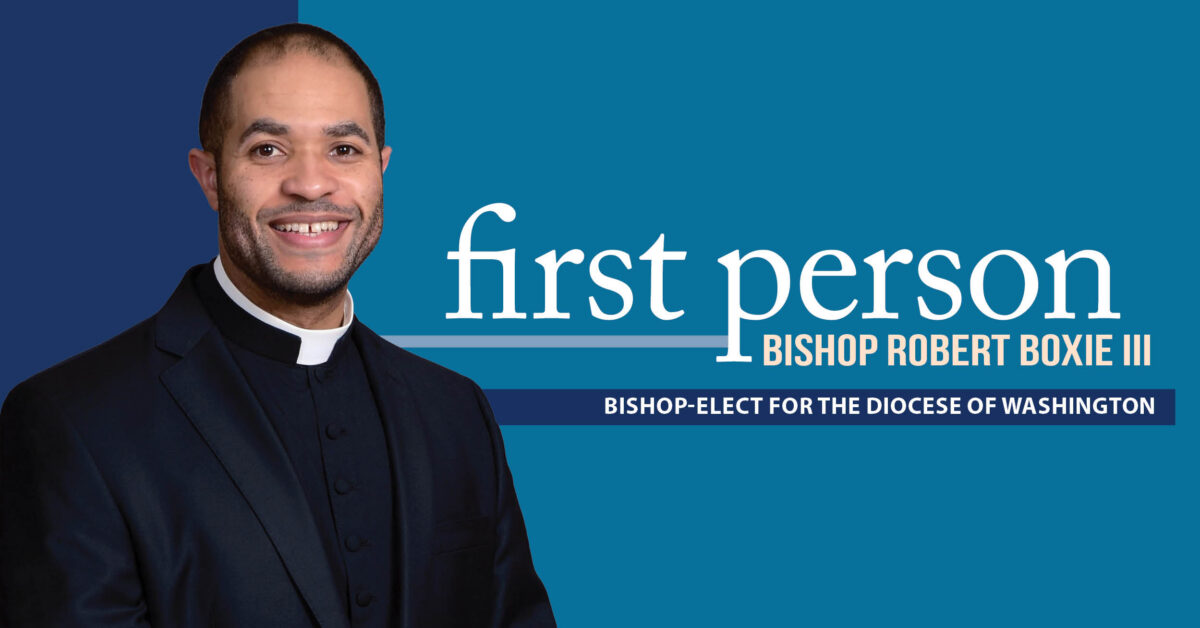
Bishop Robert Boxie III – Bishop-Elect for the Diocese of Washington
by Kerri Cooke
Southwest Louisiana hearts swell with pride when one of our own leaves the area and realizes success. Excited locals will bring up a story and proclaim, “He is from Sulphur,” or “She is from Jennings.” Father Robert Boxie III recently made the news for being appointed as auxiliary bishop for the Diocese of Washington by Pope Leo XIV. At 45, Father Boxie is set to become the youngest bishop in the United States.
Father Boxie grew up in Lake Charles and attended Sacred Heart Catholic School and St. Louis Catholic High School. While his faith blossomed when he was young, he didn’t actively seek a role within the Catholic Church upon high school graduation.
Father Boxie studied chemical engineering and music at Vanderbilt, took a gap year in which he lived in France and obtained his Juris Doctor from Harvard Law School. After working in the law field for three years, he entered The Theological College at The Catholic University of America in Washington, D.C. He would later study at Pontifical Gregorian University in Rome.
Now, as bishop-elect for the Archdiocese of Washington, Father Boxie shares his thoughts on his faith journey.
Tell us a little about growing up in Lake Charles.
I had a great childhood and upbringing in Lake Charles. I grew up with a tight-knit family and extended family and friends in a neighborhood where everyone looked out for each other. I played sports, did a number of camps and programs, especially at McNeese State University, and had everything I needed to thrive and mature as a young person. Lake Charles, although a small town, was an ideal place to form solid moral values and learn the importance of family, faith, education, community and service.
I attended Sacred Heart Catholic School from kindergarten through eighth grade. It was a small parochial school, and we only had 10 people in my graduating grade class, and I was the only boy.
I really enjoyed my time at St. Louis Catholic High School. I was challenged in many ways but given the space to discover my interests, develop as a leader and excel.
St. Louis was much bigger and those who were my competitors in sports at the other feeder schools were now my classmates. I did well academically and played sports—cross country, track and tennis; participated in student government; was the accompanist for the school choir; and was involved in a host of other activities at the school.
You have quite the resume. What was your journey before deciding to become a priest?
After graduating from St. Louis, I went to Vanderbilt University in Nashville, Tennessee, and studied chemical engineering with a second major in music. I studied music growing up (piano and oboe), but I primarily focused on oboe performance in college at the Blair School of Music. I had the opportunity to study abroad in Florence, Italy, during the summer after my junior year (2001), which was an incredible and life-changing experience for me. That summer showed me that I had other interests outside of math and science. I became open to other career fields.
With my chemical engineering degree, my original plan was to return to Lake Charles and work at one of the chemical plants or oil refineries. After the summer of 2001, I wanted to use my engineering degree in other ways. I decided to consider law since it could be useful in a wide range of fields. I also discovered that I had the travel bug and an interest in languages.
After graduating from Vanderbilt, I applied to law school but deferred a year. During my gap year, I worked on campus at Vanderbilt for a research program and then took a position teaching English at a high school in Lyon, France. I was able to realize my desire to live abroad for an extended period of time, and it proved to be a wonderful experience where I traveled, visited sacred sites, met great friends and grew as a person.
After returning to the United States, I attended Harvard Law School and graduated in June 2007. After law school, I clerked for a federal judge in Greenbelt, Maryland, just outside Washington, D.C. After my clerkship year, I worked in the D.C. office of the Houston-based law firm, Vinson & Elkins, for two years before entering seminary at Theological College at The Catholic University of America in Washington, D.C.
What inspired you to shift to priesthood and what was the process?
The idea of priesthood came to me when I was in the third grade. We were learning about the saints and I played St. Francis Xavier in our All Saints’ Day Mass that year. After learning about these heroic men and women and their contributions, I wanted to be a saint like them. I soon realized, however, that it might be difficult to be a saint (i.e. leave my family, go to a far away country, and eat locusts and honey for the rest of my life…), so I decided instead to become a priest. But as any eight-year-old does, you change your mind, especially when you learn about new things that interest you. I wanted to be an astronaut, then a basketball player, etc.
While at the law firm in D.C., I started to ask myself deeper, bigger, harder questions—what’s my purpose, why did God create me and what is the meaning of life?
It became a genuine search for the truth. I thought I could find those answers in the law, but that was not to be the case. Law left me unfulfilled, though not unhappy.
Thoughts of priesthood returned, and I tried to brush it off as nostalgia. I soon realized I had to address those thoughts and deep desires in my heart. A spiritual director helped me discern where the Lord might be leading me. I went on a few retreats in the Archdiocese of Washington and also joined a discernment group. These experiences led me to apply to seminary.
How did you transition from a corporate career and how does it feel to become the youngest Catholic bishop?
I decided to apply to the seminary for the Archdiocese of Washington. I met a number of seminarians and priests and connected with the young adult Catholic scene in Washington, which was quite vibrant and active. I thought Washington would be a better fit for me long term than returning to my home diocese of Lake Charles, and that has proved true. I love my hometown—it is the place that formed me and introduced me to the faith—but I have been able to grow and be challenged in Washington and have had a number of unique experiences than I wouldn’t have had in Lake Charles.
I began my seminary formation at Theological College at CUA studying philosophy, and then I was sent to the Pontifical North American College (PNAC) in Rome to study theology at the Pontifical Gregorian University. I was privileged to study in the heart of the Church. I received two degrees in theology, a bachelor’s in theology and a license in Biblical Theology.
When I returned from Rome, I was assigned as the parochial vicar at St. Joseph Catholic Church in Largo, Maryland, for three years, and for the past six years, I have been the Catholic chaplain at Howard University in Washington, D.C. I really do have the best job in the Archdiocese of Washington and even the entire United States. It’s a very unique ministry and one that very few priests have done—being the Catholic chaplain at a Historically Black College and University (HBCU). There are about 110 HBCUs in the country, with about 10-12 of those having a Catholic ministry on campus. Of those 10-12, about six of them have a priest on campus. I was one of those six in the country. It is quite special to serve a young adult Black Catholic community on a college campus, especially at a place like Howard University—perhaps the premier HBCU in the country.
It is quite the position to be the youngest Catholic bishop in the United States. I like to say I am the disciple John of the group. Tradition tells us that he was the youngest of the apostles who was very close to Jesus and rested on his heart during the Last Supper. He was also known as the “Beloved Disciple”. I hope to share my “youth” with the bishops and bring my perspective to conversations and interactions with them.
What will your duties be as auxiliary bishop?
As one of the new auxiliary bishops of Washington, I will assist the ordinary, Cardinal Robert McElroy, and help to carry out his vision as chief shepherd and pastor of the Archdiocese of Washington. I will help celebrate special masses, especially confirmations, and be present at other events and assist parishes around the archdiocese.
My official title is Vicar for Cultural Communities and Synodality, which encompasses a number of ministries around the archdiocese—cultural diversity, youth/young adult, special needs ministry, ecumenical and interfaith dialogue, among others.
I will also be tasked with helping to address a plan to revive, staff and resource our Black parishes in the archdiocese.
I will be listening to the various groups and cultural communities to help foster unity throughout the archdiocese and address concerns that these communities may have in order that they may live out their call to holiness through the message of the Gospel.
What would you tell other students in Southwest Louisiana about the possibilities available to them after graduation?
I would tell them to take advantage of every opportunity that comes their way—that’s what I did. The world has so much to offer, and we can’t limit ourselves to what is directly in front of us.
I would also strongly encourage students to have a relationship with God, who will lead and direct their lives. This relationship is extremely important, especially when they leave home and enter the world. None of us can do it alone, and we need supernatural grace to grow in self-knowledge and self-awareness to discover the gifts that God has given us.
There’s recently been a surge of Catholic converts. What do you credit for the renewed interest in the faith?
I believe people, especially young people, are seeking more out of life than what the world offers them. They are seeking meaning, purpose, fulfillment and joy. The world fails to satisfy or fulfill our deepest desires, despite however enticing it may be. St. Augustine of Hippo famously said, “Our hearts are restless until they rest in You.” His restless heart sought peace and comfort in everything the world offered—philosophy, relationships, earthly pleasures, women, knowledge, success, money, etc.—but it failed to satisfy him until he had an encounter with God. As it was true for him, so it is also true for us. We will find true happiness, true joy, true fulfillment not in the world but only in God.