


Wonderfully Made: Intimate Fittings after Breast Surgery
October 2026
Halloween Events
October 2026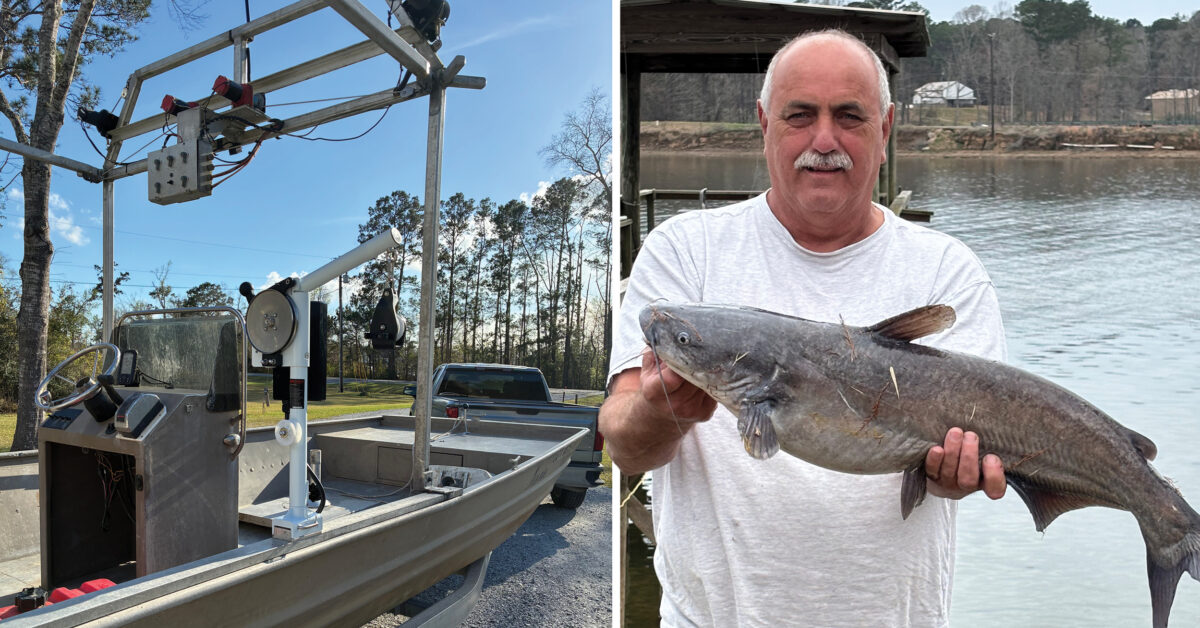
by Kerri Cooke
David James Hebert has always loved being out of the water. Combine this with a passion with utilizing the natural resources that make Southwest Louisiana special, and it’s only natural that Hebert fell in love with commercial fishing.
“When I was a kid, my daddy would take us fishing all the time in Hackberry, and I’d see shrimp boats and I’d see barges picking up their pockets,” he says. “And then I had a chance to go one time with David Richard. As long as I’ve been doing it, I’m still excited to pick up that pocket, and I guess as long as that feeling is there, I’ll continue to do it.
It was around 1987 when Hebert obtained his commercial fishing license. He began with oystering. They were a good starting point because, he says, “It didn’t take any skill. You just find the reef, drop the anchor and start digging.”
As Hebert learned from those around him, he transitioned to shrimping, which is what he has fished for the most. “What you made the most money on was shrimp. When I first started, I just used an old homemade wooden boat.”
In 1997, Hebert and his family moved to Houston so he could work a job in the oil and gas industry. The Hebert family would eventually come back to Louisiana twice. They settled in Fourchon, where Hebert would resume commercial fishing. “At that point, I didn’t want to try to make a living doing it. I was just doing it as a hobby. My boat was in walking distance of my trailer, so when I came home from work, I’d get in my boat and go shrimping. Within ten minutes of being on the water I was shrimping. “Hebert now lives in Sulphur, with Hackberry right down the road. He continues fishing in retirement.
It’s no secret the market for shrimp has changed dramatically over the last three decades, and local fishermen are struggling to make money. “I can’t think of anything since 1998 that has gone down in value,” Hebert says. “The fuel prices are high. Everything you can think of on that boat has gone up in price. The nets went up, the doors went up, the ropes went up. Everything went up except for the shrimp.”
Foreign shrimp flooding the market has caused the demand for local shrimp to plummet dramatically. Hebert notes that when Louisiana passed the law that restaurants would have to publicly label whether they served foreign or Gulf shrimp, local shrimpers thought business would increase, but since they can’t compete in cost with imported shrimp, nothing really changed.
The Blue Horizon in Hackberry is the only shrimp house commercial fisherman can sell to in lower Cameron Parish, according to Hebert. The lack of business where shrimpers can offload their catch is a severe problem.
When asked why people continue to fish in local waters even though the profit isn’t there, Hebert says, “Because it gets in the blood. That’s all they want to do. That’s all they’ve ever done. That’s all their parents have ever done.”
Hebert continues to hope for a solution for local shrimpers and has a particular interest in how shrimp can help address food insecurity. At the end of the day, Hebert says, “Forget about the world. I’m concentrating on my community. Sometimes things can grow to new levels, but it usually starts with ‘how do we help people in our backyard?’”