



GIVE BACK IN A SPOOKTACULAR WAY! Kiwanis Club of Lake Charles Launches Coats for Kids Campaign with 10th Annual Spooktacular Event
October 2026
Success, Redefined
October 2026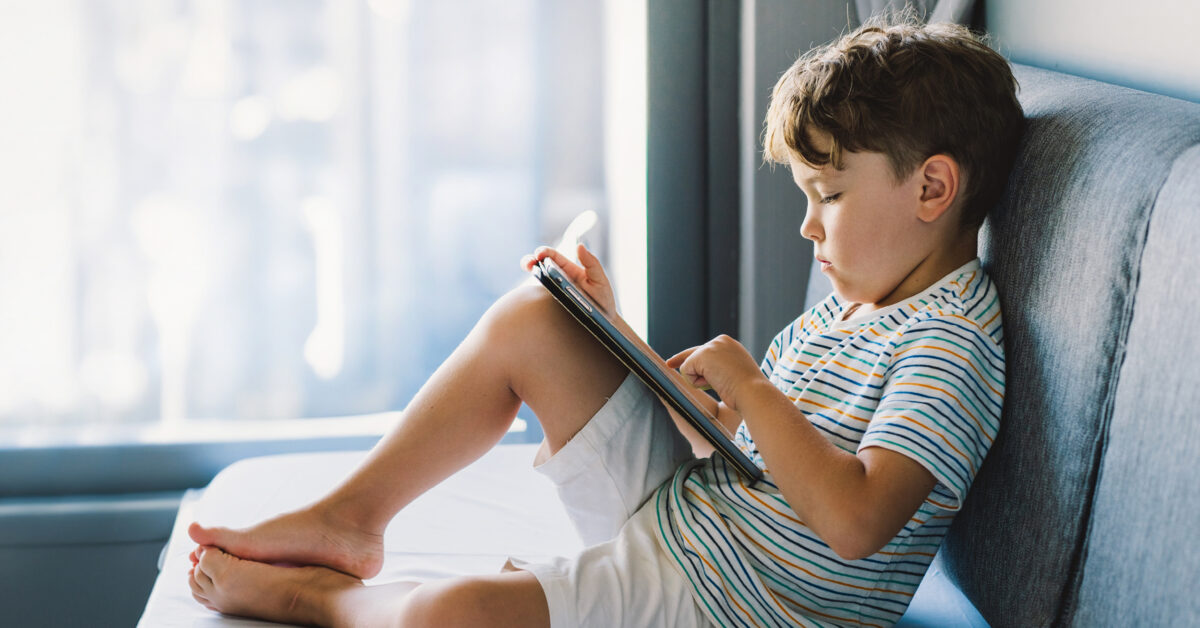
by Kristy Como Armand
As children spend more time looking at phones, tablets, computers and other screens, parents are understandably concerned about what all that screen time could be doing to their eyes. Eye doctors are seeing children with symptoms such as dry eyes, eye strain, headaches and blurred vision, but does screen use cause lasting damage?
As children head back to school and spend more time with screens and books, doctors at The Eye Clinic want parents to understand what we know about screen time and children’s vision and, just as importantly, what they can do to help protect their children’s eyes.
“It’s a fact that we are seeing a worldwide increase in myopia, or nearsightedness,” says Rebecca Kindler, O.D. optometrist with The Eye Clinic. “What we’re still learning is exactly why.”
A 2024 report from the National Academies of Sciences, Engineering, and Medicine confirmed that myopia has increased significantly worldwide over the past several decades. Some estimates project that nearly half of the world’s population could be nearsighted by 2050.
Although screens often get the blame, current research does not show that digital devices alone are responsible. Near work, including reading traditional books, may play a role, but evidence about its direct impact on myopia remains inconclusive. One factor with much stronger evidence is time outdoors. Research indicates that spending more time outside in daylight can help reduce the risk of children developing myopia.
“That gives parents another good reason to encourage children to put down the devices and spend some time outside every day,” Dr. Kindler says.
There is much clearer evidence linking extended screen use and other close-up activities to digital eye strain. Children, like adults, may experience dry or irritated eyes, headaches, tired eyes and temporary blurred vision. “Those symptoms are typically temporary,” says Dr. Kindler, “but they can become frequent when children spend long periods focusing up close without a break.”
That doesn’t necessarily mean a child needs computer glasses or that blue light from screens is damaging their eyes. Instead, Dr. Kindler says one of the simplest solutions is taking regular breaks.
“We blink less frequently when we’re concentrating on a screen, which can contribute to dry, tired eyes,” she explains. “Extended reading, writing and other close work can also cause eye strain. We recommend the 20-20-20 rule: every 20 minutes, look at something at least 20 feet away for 20 seconds.”
Parents can also help children develop healthier vision habits:
• Build regular outdoor time into each day.
• Encourage frequent breaks from screens, homework and other close work.
• Alternate digital activities with activities that allow children to focus at different distances.
• Keep screens a comfortable distance from the eyes rather than holding devices very close.
• Adjust screen brightness and contrast to a comfortable level.
• Reduce glare from windows and overhead lighting.
• Encourage good posture and an appropriate viewing distance when using computers or reading.
• Remind children to blink regularly when concentrating on a screen.
• Avoid recreational screen use for long, uninterrupted periods.
• Pay attention to persistent complaints of headaches, blurry vision, eye discomfort or difficulty seeing at a distance.
“Screens are part of everyday life for children, both at school and at home, so the goal isn’t necessarily to eliminate them,” Dr. Kindler says. “The focus should be on helping children develop healthy habits that give their eyes a break and making sure vision problems are identified early.”
For more information about children’s eye health and vision problems, call The Eye Clinic nearest you or visit TheEyeClinic.net.